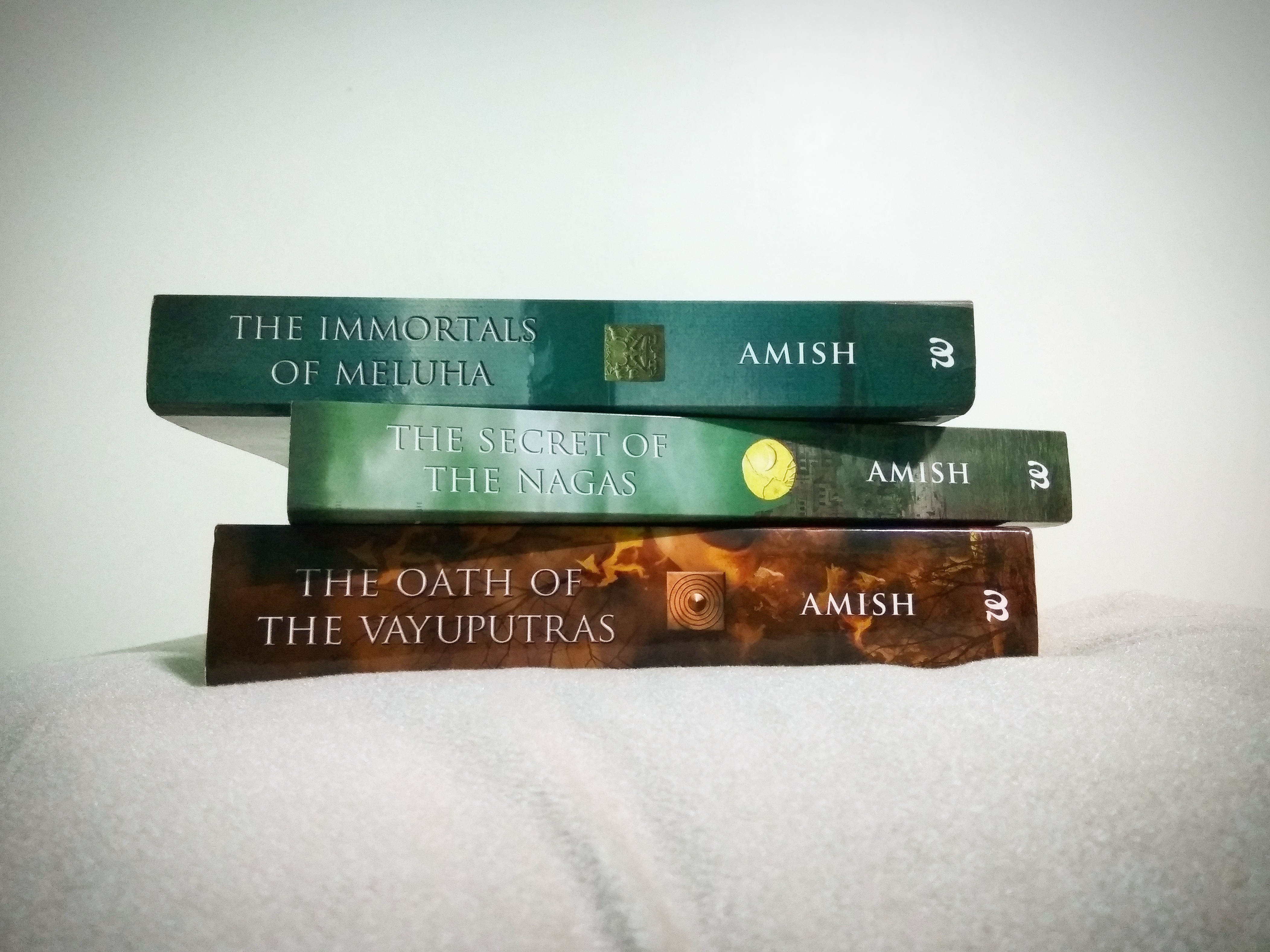
The Shiva Trilogy is an old series by now and most of us have read it, after all, 3 million copies have been sold nationally. Having picked up this book recently, I was looking forward to a good read as I have heard only praises of this series and it exceeded my expectations by all means. As the plot rediscovered the ancient legend of the rise of the Neelkanth and his destruction of Evil, I expected a heavy language and was pleasantly surprised by the use of contemporary language. The mythology has been given new shades through the humanisation of the Lord Neelkanth. In this aspect, Amish Tripathi has succeeded immensely. The Lord Shiva is shown as humanely as possible, with his astonishment, humility, love and finally anger.
The book one of the series, The Immortals of Meluha, captured the nation’s attention widely. From Sashi Tharoor to Sekhar Kapoor, reviews and praises dropped in from all the corners. The book introduced the Tibetan Barbarian, Shiva as the Lord Neelkanth and opened up the glorious world of Meluha in the ancient India. The codes of the Seventh Vishnu, Lord Ram is protected and followed religiously. The new saviour of the world is quite uncomfortable at receiving the unwanted attention but he is conscious of his duties and strives to perform accordingly. The strikingly beautiful, intelligent and talented warrior Sati, the Princess of Meluha, is introduced. The novel ends at the surprise attack on Sati by the hooded Naga figure.
The book two, The Secret of the Nagas, only deepen the complex plot of the story. The Lord Neelkanth is shown to be living a happy married life as well as following his destiny in search of the true Evil. The differences between the Suryavanshis and the Chandravanshis are seen to be decreasing as the races merge and the Meluhan king, Daksha who is also Sati’s father, is declared the Emperor of India. In this book, the habitants of the southern part of India, Nagas are also seen to be aligning themselves with the Neelkanth, due to the primary connection of the Queen of Nagas and the Lord of the People with Sati. Reaching the conclusion that none of the inhabitants of India is the embodiment of Evil, Shiva, with the help of the Vasudevs, reach the conclusion that something good that has served its purpose, has now turned evil.
The final book, The Oath of the Vayuputras, answers all the questions as it descends to a predictable and tearful end. The tragedy that is well associated with the myth of Lord Shiva does take place and leaves the reader devastated. But the impact of the tragedy is lost as a result of a prolonged climax. The reaction of the fearful Mahadev, at the death of the love of his life is underwhelming to an extent. Given the time that he takes to move away from the corpse of Sati, it is almost unbelievable that he would still punish the Meluhans with utter violence. The calm at the end of the series is much needed and provides a clean completion of the tale.
I am most disappointed with the final book of the series as it didn’t quite deliver. The tragedy is, Amish’s competition is with himself and the last book of the series neither had the utter brilliance of The Immortals of Meluha nor the action packed mystery plot of The Secret of the Nagas. Most of the time of The Oath of the Vayuputras is spent planning for a big ambush that never really takes place or travelling to distance places. The final attack is of treachery, thus no actual battle takes place. The sheer number of characters is vast in the last book for obvious reasons and the writer has done justice to them by giving them apt plot time. All the characters have distinctive speeches and their outline is well developed. Amish is a visionary writer and his epic encompasses the vast area of the whole of India and stretches some more to the west. Through the virtues and follies of men and women, the writer teaches us valuable life lessons as effortlessly as a grandmother recounting fables to her grandchildren. We are thrown into an ancient world of mythology, but the reader never really feels alone. The characters are always introduced and reintroduced at the begin of every book and the author holds the plot steady so that even when it moves fast, the reader is not left behind. I have finished the last book in two days and I did not once had to gone back and reread a line or a portion of the book to recall who a particular character is. The language is lucid and easy flowing. The style of the narrative holds the right pace. There is abundance of action scenes though just not enough for the climax. Overall, writer Amish Tripathi has done a great job at the retelling of an ancient myth. I am giving The Shiva Trilogy by Amish Tripathy 4.5 out of 5.
 The Calcuttan Bibliophile
Leave a comment