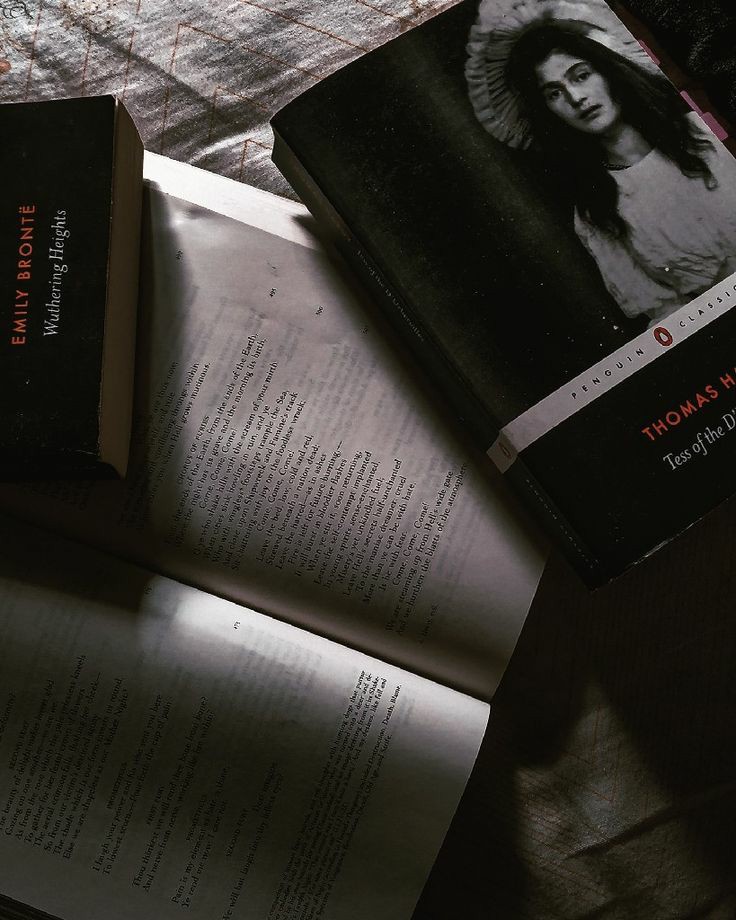
In this month’s guest piece, I’m hosting a dear friend and fellow bibliophile, Ishana Ghosh, on my blog as she shares her perceptions on the treatment of Tess in Hardy’s novel.
–@thecalcuttanbibliophile
This was a book I was forced to pick up because of my university curriculum, and one I was sure I was never going to finish because Victorian literature was something I do not find myself enjoying. With its long and meandering plot, and harsh didactic tones, I expected Thomas Hardy’s Tess of the d’Urbervilles to be nothing different. I painfully trudged through the novel and found myself as unimpressed as I had expected to be. However, it is a few months later since I had finished the novel and my opinions about it have changed completely.
The novel narrates the story of Tess, a woman in a society that doesn’t give her much. Having the backdrop of the Industrial Revolution as well as the French Revolution, the enormous changes that the English civil life had to go through is depicted in the novel. Due to circumstances, Tess has to find a source of employment to sustain and support her family. She gets roped into this idea that has been planted into her father’s head that they were related to a wealthy family of the same name. Tess is made to go to that house and seek out employment and eventually break the news of their relationship and thereby have a share in their wealth.
However, the wheel of fortune turns the other way and barrages Tess with a series of misfortunes which govern her every move from then on. Tess comes across two male figures, Alec D’Urberville and Angel Clare who seem to offer her some sort of redemption, but it ultimately reveals itself as a sham. Through the course of the novel, Tess has to face a series of challenges, and some she can gain victory over and others haunt her existence. At the end of the novel, Tess is not absolved from what are believed to be her faults. She has to pay a price for committing acts from a standpoint where the audiences see her finally taking control of her life, rather than passively accepting whatever is thrown at her, whether they are the result of her own actions or just the result of her circumstances.
The conclusion of the book has been one of the main reasons why I have felt so strongly about it. It shocked me, to say the least that Hardy ultimately does subjugate his protagonist after trying to portray her from a liberated point of view. The male characters go unpunished for their crimes and actions, and therefore I refused to accept that this work is a story about the empowerment of Tess.
If Tess truly was empowered, she would have more agency in the novel to make her own decisions and stand by her actions and defend them. She is scrutinized from the get go, and even when she comes back to her family, she has to leave soon despite having nowhere else to go or no funds to support her because her family was becoming the source of gossip in her town. She has to keep up appearances throughout the novel, appearances in front her family, her friends, and arguably even from herself. Therefore, it was very hard for me to believe that Hardy’s aim was empowering his creation, rather than setting an example through her.
However, in my many heated arguments about how the novel does not live up to its claim of being empowering, I figured out some nuances that contradicted my initial thoughts. Tess was a woman in a society where a woman working on a farm was something that would shock the sensibilities of many. The controversial seduction scene which shrouds any glimmer of happiness in Tess’s life, was a defining moment for her because it gave her the realization of a harsh truth, she had to be her own hero. The inclusion of such a scene in a Victorian novel shocked the sensibilities of the audiences which even resulted in its omission from various versions.
However, the public acknowledgement of such events, is what I believe makes this work different from other Victorian novels. The fact that Hardy acknowledges that women have to suffer atrocities and then live with it, finding no escape from things that they have no control over, sheds light on a harsh reality. The male figures in the novel are easily absolved of their actions, and sometimes don’t even consider their actions to be detrimental.
I was forced to rethink my initial review of this work when I considered the possibility of Tess being absolved from her crimes and given the retribution that she deserved, and I concluded that that line of argument would not convince anyone – neither the Victorian audiences, nor the audiences of the preceding ages. I believe it goes to show how much or how little society has been able to mold their opinions and beliefs about the position of men and women in society. If Tess would have been able to get away after the murder, she would have to continue doing what she had been doing for the entirety of the novel – running. However, by owning up to her actions, she can finally rest putting away everything that plagued her and maybe to some degree, feel confident that she was able to take back some degree of control of her life from the man who had snatched it away from her in the course of one night.
Rather than being a tale about the empowerment of Tess, I believe Hardy very tactfully is able to represent how society functions with respect to women because ultimately Tess has to empower herself, where society becomes a passive observer and critic. Whether her actions were justified or not, can only be judged when one examines whether she was left with any other avenue to free herself from her shackles.
— by Ishana Ghosh.
Ishana has been a delight to work with for the past two years. She is passionate about the narratives she comes across. She has completed her undergrad from Loreto College, University of Calcutta and has just finished her postgrad in English Literature from St. Xavier’s University where I was fortunate enough to come across her. She is a talented swimmer, singer and pianist. She is incredibly resilient, straightforward and confident. She has the outstanding ability to approach every narrative from a fresh perspective and coming up with unique observations.

 The Calcuttan Bibliophile
Leave a comment