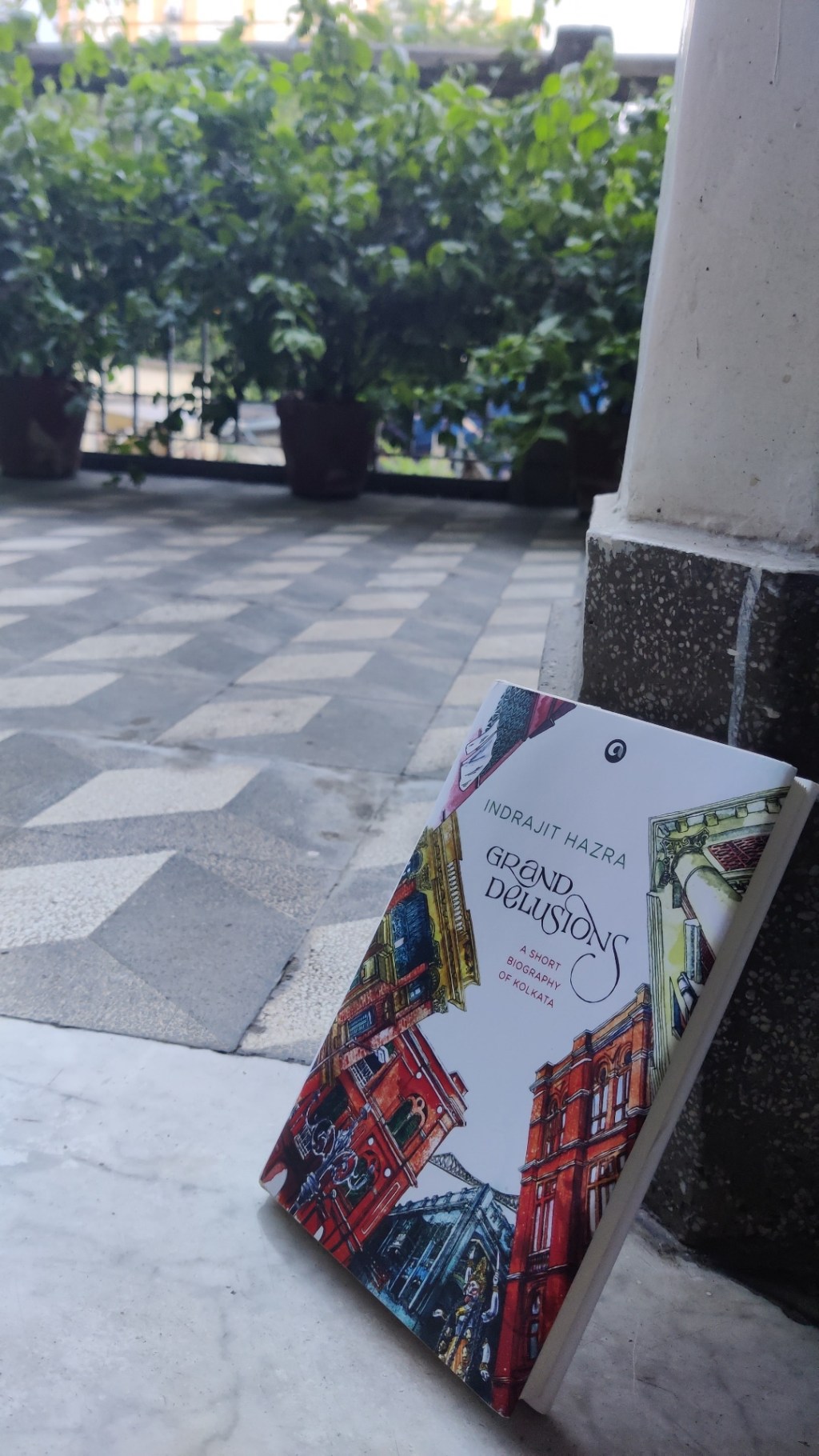
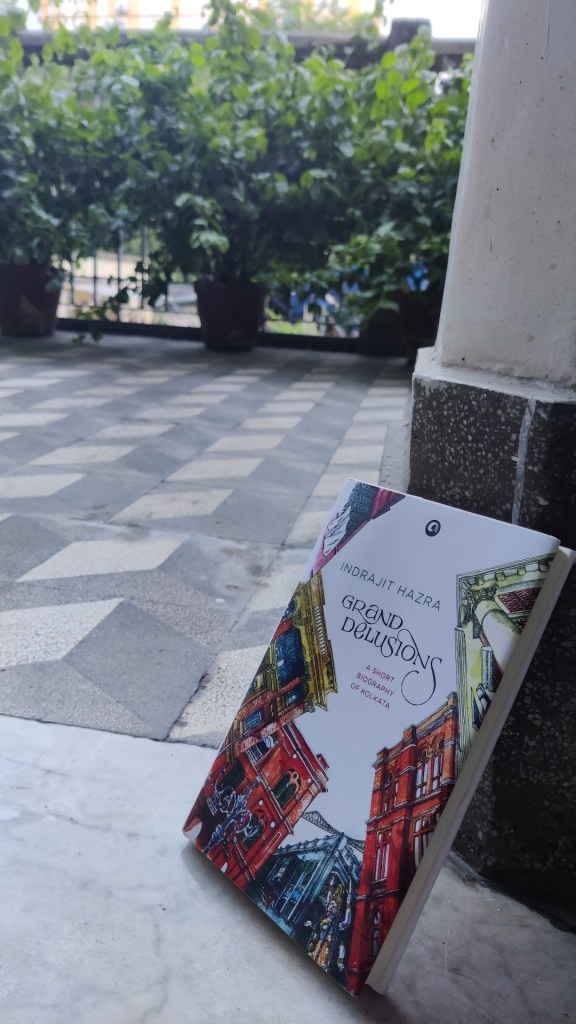
When I found Indrajit Hazra’s Grand Delusions tucked away in the biography section of Amazon, the name instantly caught my attention. The review by Dr. Ramachandra Guha fueled my curiosity even more and truth be told, I bought the book to gauge why a renowned historian would feel like his knowledge is inadequate after reading a book which admits in the subtitle that it is a “short biography”. After reading the book, I have to agree with Dr. Guha, I feel, I will view the city with “new eyes and greater understanding” now.
When you fall in love with a city, what is it that you truly love? Is it the landscape around you, is it the history of the place, or is it the relationship you share with the people there? Loving a metropolitan city becomes complex because one generally associates the place with a sort of urgency. An urgency to get work done, an urgency to always be on the move, and an urgency which does not allow you to stop. Falling in love with a metropolitan city almost presents itself as a paradox because since time immemorial, city life has been considered to be something poets and dreamers run away from, to the quieter, more picturesque surroundings of the country. Yet Kolkata also finds itself existing in a sort of limbo between Calcutta and Kolkata.
Unlike the other fast paced metropolitan cities of India, Kolkata is often regarded as a city that is still stuck in the past. “What Calcutta thinks today, India thinks tomorrow”, was a phrase quite potently used during the British Raj and despite the mammoth changes all around, this feeling somehow has not evaded the sentiments of the Kolkatans. People often try to escape Kolkata for bigger and better opportunities, somehow one can never completely rid themselves of the city if they’ve truly experienced what the city has to offer. Indrajit Hazra also finds himself in a similar predicament where although he has moved from Kolkata to Delhi, he finds himself unable to escape the city. With his personal experiences meshed in with the biography of the city, Grand Delusions delves deep into the historical, political, social as well as personal aspects of the city which truly make this a delightful read.
Most representations of Kolkata always depict the Victoria Memorial, the Eden Gardens, the Howrah Bridge and the apparent romanticism that these contain. But the difference in the way the city is presented in Hazra’s work is apparent right from the first chapter where he starts his narrative by talking about the street graffiti. The author truly becomes a story-teller and a guide, almost holding the audiences hand while taking them on a journey through the cities known and unknown lanes and by-lanes.
If Raja Rao had reclaimed the English language from the British in his Kanthapura, Hazra reclaims the language from the rest of India by adding Bengali spices to his narrative (Arguably, this book might also be considered to be ‘oposhonskriti’ as he writes in his book, because a book about Kolkata isn’t even in Bengali). What makes this work truly personal, not just for the author but even the readers is the fact that the weird quirks that are intertwined with the lives of the people have been depicted effortlessly. The feud between the north and south, Durga Pujo, the political rivalries, Park Street, the love-hate relationship with the Marwari community, as well as the city’s insatiable love of football and Diego Maradona have all found its way into the book. Hazra’s subjective as well as objective dealings gives the novel its unique charm, where a resident of Kokata will find something they identify with, and a stranger will be completely enraptured in the story.
However, what I believe is the best part about this read is the fact that at no moment is the author glorifying any aspect of the city. He is brazen enough to call out the city’s shortcomings or failures, without comparison or any didacticism in his tone. Hazra’s deep knowledge of the city, both historically as well as in its contemporary existence, makes this biography truly unique. A common phrase in most history text books about any civilization or dynasty is that ‘there were great historical, social, political and economic changes’, and if anyone ever wanted such an analysis of Kolkata, this is the book that one should recommend to the reader. Although Hazra seems to have escaped Kolkata for the same reason most do (to know what it is, read the book), he still somehow has not completely been able to rid himself of the aura that the city represents.
by Ishana Ghosh
 The Calcuttan Bibliophile
Leave a comment