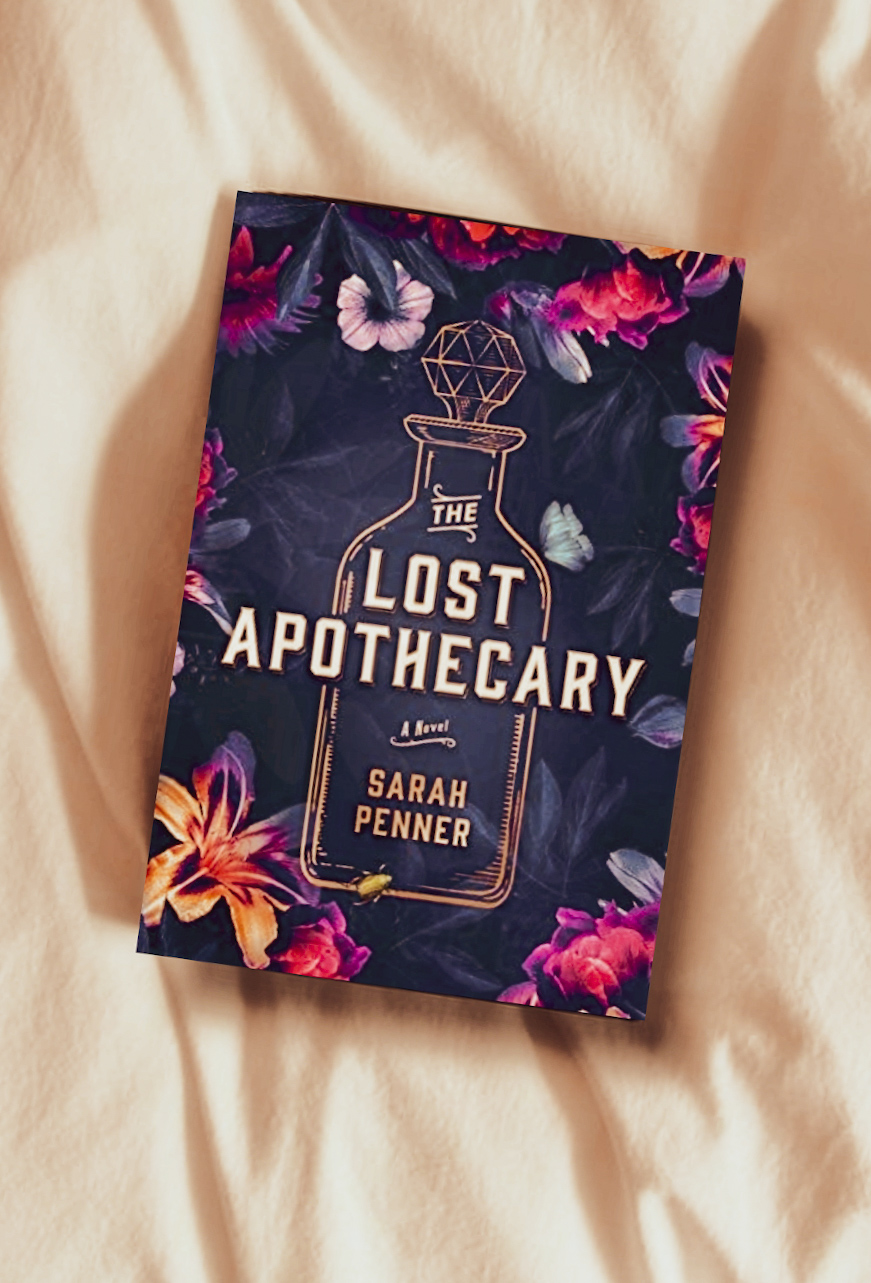
Sarah Penner’s historical fiction is full of mystery, intrigue, and under-delivery.
This is a review full of spoilers but I swear to not give away the twists (if there are any).
It promised a Georgian female serial killer working on behalf of wronged women of the contemporary society. It did give us the promised serial killer but lacked in the execution of the same. In creating a parallel present plot, it took away from the historical daring plot and made the storyline succumb to a flatline.
I won’t lie, I gave into the hype and finished the book in a day (5 hours to be exact). It was a genuine page turner for me, there is no way that I would have actually finished the book if it was not. The apothecary pov chapters were enchanting in the beginning and I loved the mudlarking part of the present day pov chapters of Caroline. But it is Caroline who made the book worse for me. I was more drawn to the book because of the woman poisoner and her serial killing, somehow, that portion of the book got overshadowed by the quest of Caroline to find the apothecary and her personal “drama”.
So the book begins with Caroline going mudlarking alone in London as she finds out that her husband has been cheating on her and leaves for the vacation on her own. So far so good, kudos to Caroline for the solo trip. It starts becoming a little sketchy as she opens up more about herself. I cannot fathom the reason why the author thought that readers would connect with someone who doesn’t appreciate a degree in history but actually goes for a postgrad degree by the end of the novel. The preoccupation with pregnancy was the most annoying part of the novel. I think, we, as women and readers in general, have come far enough into the 21st century to have other obsessions or plot devices to appreciate. The either career or family approach of Caroline also didn’t sit well with me.
Nella, the mysterious apothecary, remains a mystery by the end of the novel as well. Her reasons and methods are shown through the extent of the book but it lacks the passion required in portraying such a character. She is not a cold-blooded murderer, she is not a vengeful woman, in her ordinary character, she is every woman ever. While I appreciated that aspect of the character, it became too ordinary in the narration to stand out as a protagonist of the novel, the object of interest. I understand that the author was trying to conjure up this figure from the evidence that Caroline gathers but the approach kind of falls flat by making the most dynamic character of the novel become somebody too ordinary. Nella’s character as somebody extraordinary in the guise of the very ordinary would have been more appropriate for this novel. I was really interested in the kinds of poison’s she used and the reasons for the murders, but I was sorely disappointed in both regard. While I was looking for an Inej-esque character here with an action packed plot, I found the too simple plot to be dull.
Eliza, the 12YO lady’s maid, remains my favourite in the book as she provides the comic relief and a bit of variety in the otherwise bland apothecary plot. I would have liked to see Eliza as a greying Nella’s assistant and gradually taking over the apothecary work.
While there are a number of reviews pointing out the plot holes in the Caroline pov chapters, I was most taken with the fact that the women who came to get the poisons for the men in their lives. They willingly gave their correct name and address to the apothecary knowing that she will keep a record of it all. The whole point of the records is also very confusing. Why keep a record of all the crimes in your shop along with the names of the women? The record becomes a key item in establishing the apothecary as real but even finding the records book was not difficult for Caroline. Considering the situation in which Nella and Eliza had to leave, I find it very surprising that Nella just left the records there in the shop while fleeing from the police, essentially condemning every woman who has ever bought any poison from her if her lair is ever found. This section of the novel, which is supposed to be feminist, becomes redundant considering the ledger. It is about women controlling their own fate but it lacks the factor to make it more interesting. Why would women want to kill the men in their lives? The reasons are the most easily decipherable ones. Whereas, it is quite clear that Penner is drawing the readers’ attention to the sufferings of women in the 1790s, as a historical fiction, it lacks imagination. The ending more so as it ends extremely abruptly without any real impact. It reminded me most of the Outlander series by Diana Gabaldon and I’m inclined to believe that the Outlander was better than this even with its timetravelling stones and everything.
Don’t get me wrong, I love the concept of the novel and it is one of my better reads this year but it’s the execution of the plot that doesn’t sit well with me. The Caroline pov chapters as a contrast to the modern day woman and her plights could have worked well against the Georgian England. But the situation of women is too different now, divorce is possible without the threat of “ruin”, women can own property, and have the choice of becoming and remaining independent. So the parallel couldn’t quite capture what the author intended.
The problem of the plot lies in it potential. The promise of a serial killer and a gripping saga of some cold-blooded poisoner ended “not with a bang but a whimper”. 3 stars for thought and 0 for execution. I would recommend the book as a light read if you are into historical fiction- if you have given into the hype of the blurb, reduce it by 50% before starting the novel.
 The Calcuttan Bibliophile
Leave a comment