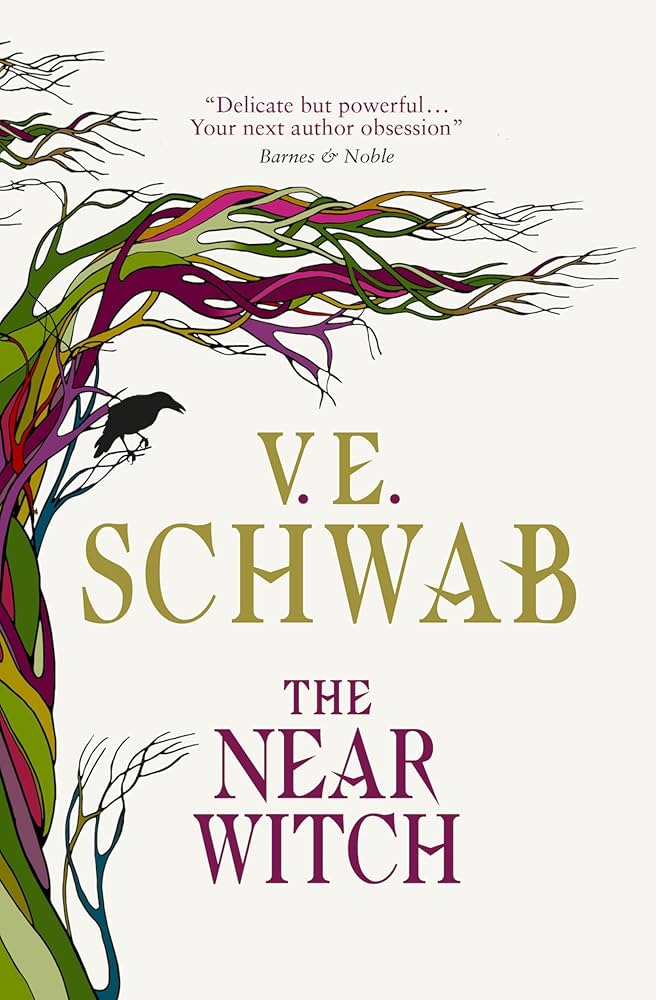
I am on a bit of a V. E. Schwab binge this year. Having read the Threads of Power trilogy recently (and not having posted about it), I jumped immediately at the available copy of The Near Witch at my library.
Spoiler alert: I loved the cozy fantasy vibes with witches-reclaiming-their-power narrative of it.
Schwab is a master at world-building. The quaint little village setting seen in so many of her novels works very well and The Near Witch is no exception. But you won’t be mistaking, say, the French village from The Invisible Life of Addie LaRue as the Spanish village from Bury Our Bones in Midnight Soil and it’s not just because they are French and Spanish, it is the very distinct and vibrant, yet familiar characters of Schwab that find their place in The Near Witch just as well.
Now, I came to this book after all the previously mentioned works of her, (yes, I will, hopefully, someday write about them too) but The Near Witch is older than all of them. Published in 2011, Schwab is still sharpening her craft here, you see single POV narrative, almost no outside influence over the little ecosystem of the village, Near, and a little shaky backstory. The fact that I noticed all this in 2025 after reading quite a bit of her works is only a testament to Schwab’s improving craft. But the story stood out in simply its need to convey a message and that is priceless.
The Near Witch is a story we all know. There was a quiet village, a stranger came to the village, bad things started happening in the village, the stranger is hunted down and dealt with, without questioning if the bad things were their fault to begin with. This witch hunt is made into a literal witch hunt in this story.
The village of Near had a resident witch. Near Witch has been dead a long time when this story begins. The protagonist, Lexi, is attuned to the natural elements if not with the power to control them. So when this mysterious stranger shows up in town one night and she is instantly drawn to him, she knows there’s magic about him.
Lexi’s feelings and distinct emotions paint the other characters of this book acutely by virtue of being a single-POV narrative. Lexi is a typical Schwab-heroine with her headstrong attitude and more competence than the men around her seeking to control her.
There are still witches in Near. Magda and Dreska, the two sisters practice an elemental sort of magic that is mainly about minding their own business, brewing tea, gardening and making charms for the villagers when they seek them out. Nw, the Protectors of the village avoid them, relegating them to a space outside village walls, coincidentally just beside where the Near Witch’s hut used to be.
Discrimination towards women with perceived powers and dismissing any opinion of young women is so rife throughout the book that I had to put it down for a while before being able to come back to it. The stranger, being a man was not exempt from the contempt. Being new and powerful made him the target of ire in that village since they couldn’t control him.
Now, the actual book isn’t really about this.
There’s a proper adventure with action, magic and romance but the societal structure that Schwab built in the microcosm of Near really stood out for me.
The story is, at once, ironic and heartbreaking in its myriad of plot points. Feminist to its core, this book’s best feature is the curiosity it invokes instead of being didactic in nature. It doesn’t sit you down and tell you that the men with the weapons and torches are the bad guys or the fact that the stranger is the saviour the village needed, it let’s you figure it out and even then shows the characters in a well-rounded manner with their redeming qualities and drawbacks.
I have 3 full pages of notes on this because the book was really thought-evoking. But without giving away the plot there’s only so much I can say about the specifics. If you need one reason to pick up this book, let it be the question Schwab inserts very subtly about who the villain of the story really is — is it the Near Witch who was murdered for a crime she didn’t commit or is it the people who murdered her because they had already decided that she was guilty? And then, whose fault is the actions of the witch in retaliation when she finally returns?
Strike up a conversation about The Near Witch and more with me here.
This has been one of the top reads of the year for me and I cannot recommend it enough for both readers getting introduced to V. E. Schwab and long-time fans of hers.
 The Calcuttan Bibliophile
Leave a comment