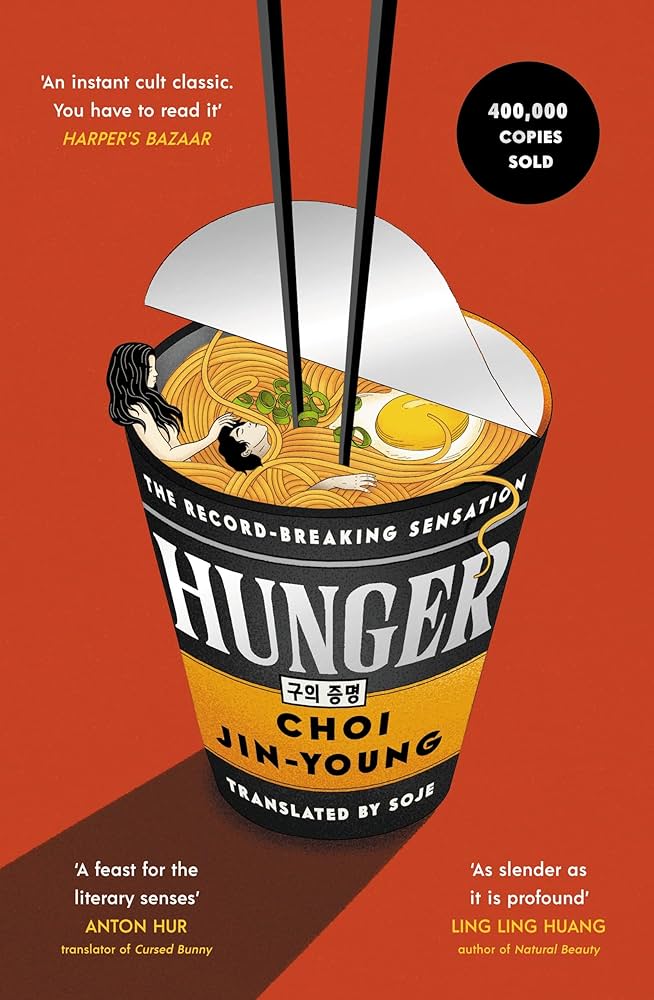
“Hunger” by Choi Jin-Young, translated by Soje, is a Korean literary fiction in translation I picked up randomly from a bookstore in my city. If you know me at all, you know it is not common for me to buy a book and read it the same month, or even week. I read this book that same week.
I do not know if it was the cover or the blurb or even just the lure of cannibalism that made me want to know more about this story. It lurked, somewhat sinisterly, in my peripheral vision for a time as a finished up my then current read and then there was no question, set TBRs were abandoned in favour of a 126-page book.
Maybe it was the fact that the book was so short that made me gravitate towards it, maybe it was the micro chapters. I expected it to be a limited-time engagement. I expected to be disgusted, which I was. I did not expect it to resonate, because why would a book where a woman eats her partner upon his death be resonating at all?
The story is about Dam, a girl being raised by her grandfather and later aunt, and Gu, a boy raising himself with largely absent parents. They recognise kindred spirits in each other early on in life and even though life takes them away from each other, they find their way back. But Choi Jin-Young’s protagonists are disillusioned. Even in love, even aware of the miracle of each other’s existence, they are not naive. Societal expectations shape up as financial success for them. But as the author puts it, you need money to make money. In South Korea’s ruthlessly capitalistic society, Gu is buried under his family’s debt as his parents make their escape, leaving him burdened with it all. Dam’s work at the supermarket slicing meat correlates to Gu’s debt collectors seeing him as a piece of meat to sell off for organs. Upon his death, she cannot let the debt collectors get their hands on his body. So, she eats him raw.
The book is marketed as Romeo and Juliet meets The Vegetarian. While I don’t know about Romeo and Juliet since Dam does not actually die for Gu, The Vegetarian by Han Kang was the book I was reminded of while reading. Dam’s devotion to Gu drives her to the unthinkable reality of eating her beloved to not let him be used by the society anymore.
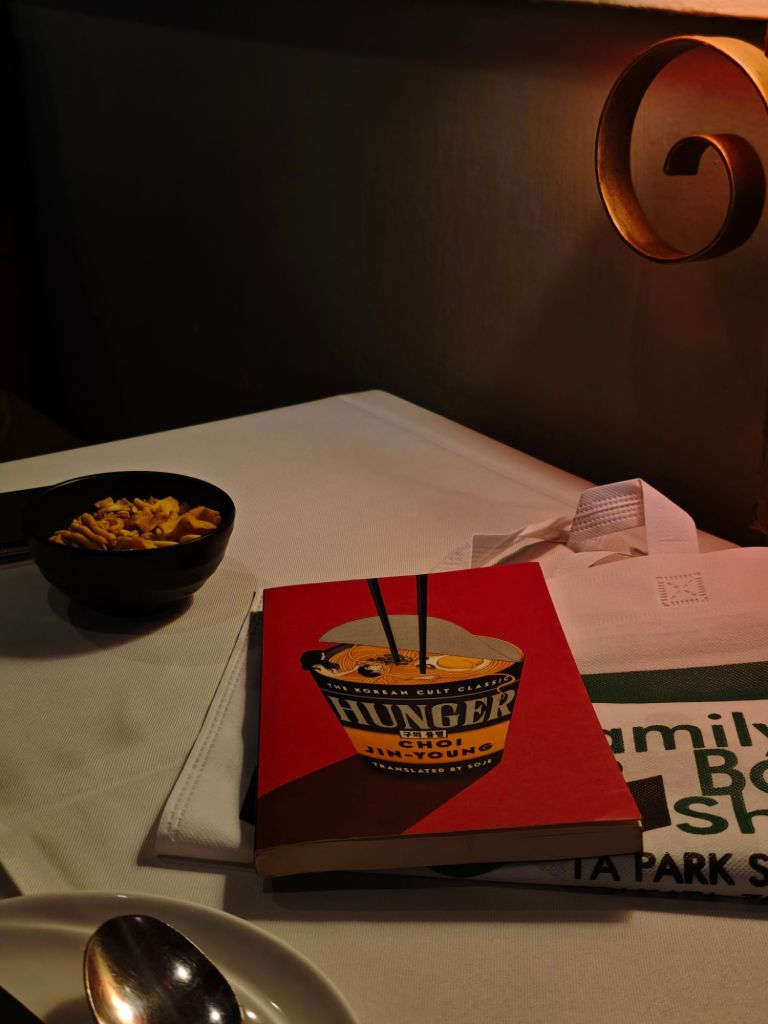
The micro chapters of the book with alternating narrations by Gu and Dam play with the linear story-telling style, opening with Gu’s death in the streets and revealing their history in the course of the plot. The stream of consciousness writing of the book added a layer of despair and desperation to the story. The shock factor of the book derives its effect from the depiction of cannibalism, but its depth is driven by the greed of the society. It questions what it is to be human in the face of so many expectations. Gu feels like a meat machine, working himself to the bone and still not earning enough to slip the yoke of his parents’ debt. There are other characters around the protagonists painted with the blood of their own thrashed hopes and dreams to the point that Gu and Dam do not even dare to dream. They are conditioned into being harsh realists.
The book is so jarring in its bizarreness of cannibalism so much so that the reason for it all could be modern society makes it feel like a plot straight out of a dystopian novel. These characters are just two broken people trying to survive in a world designed to keep them downtrodden. The way Choi has portrayed grief, loss, and death is exceptional and thought-provoking. I recommend looking up the trigger warnings before diving into this one. It’s a great piece of fiction to hook you from the very beginning and you can finish reading in one sitting.
This book might finally get me back to reading Korean literary fiction. I have not read beyond Han Kang in the genre at this point and I look forward to exploring more.
You can grab your copy of Hunger here.
(I earn a small commission from every qualified purchase from the link to continue reading and reviewing)
Have you read any Korean fiction in translation yet? Which ones are your favourite or on your TBR in 2026?
Feel free to drop a comment or reach out to me across social media at @thecalcuttanbibliophile. I would love to hear from you.

 The Calcuttan Bibliophile
Leave a comment