I am on a bit of a binge of Japanese fiction in translation and reading all of Sayaka Murata’s works directed me to Mieko Kawakami’s novella, “Ms. Ice Sandwich”. She has summed up the experience of growing up lonely in small-town Japan and the intense fascination that comes with the age within 100 pages.
Mieko Kawakami’s novella “Ms. Ice Sandwich” is translated by Louise Heal Kawai, who has worked on Seishi Yokomizo’s Detective Kosuke Kindaichi books. Coincidentally, I am currently reading The Honjin Murders by Seishi Yokomizo. While I am super excited to read more works by the same translator, these books are nothing alike. “Ms. Ice Sandwich” is in fact more reminiscent of “Convenience Store Woman” by Sayaka Murata, however, there’s less existential crisis.
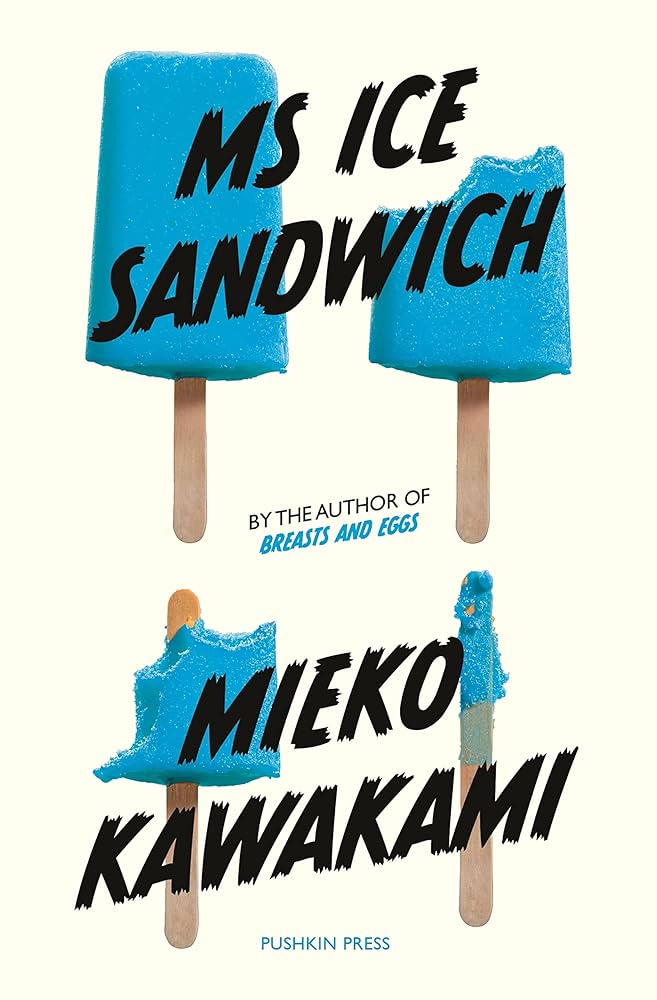
I love an unnamed narrator and Mieko Kawakami has nailed that narrative style with her young protagonist in this work. The plot appears as an innocent boy’s crush on the convenience store woman on the surface, seemingly a rite of passage that is as inevitable as the culmination of that crush. Kawakami, however, succeeds in making this simple and short story a reflection of various aspects of the Japanese society. Not only does the book highlight the narrator’s surreal loneliness in almost poetic prose, his loss of his father and grandmother, his absent mother, his solace in art and his inability to blend in with his peers, but it also depicts Japan’s perception towards clinical beauty and how men are triggered by it.
The young narrator is fascinated by this unusual beauty he spots working at the sandwich station in the convenience store. While his gaze is appreciative, his mother cautions him of staring and offending. His peers at school have noticed her and are ready to insult her at a moment’s notice without ever knowing anything about her. The narrator does not really have friends. His classmates are pretending to grow up as fast as they can and he just doesn’t understand the rules of the equations.
The narrator’s growing friendship with Tutti lets him get closer to a similar soul as him. Tutti is brought up by her father and stands out from the rest of their peers as well. While she opens up about her obsessions to him, so does he. Tutti offers the narrator more insight into the worldly rules as he sorts out his feelings.
This roundabout take on grief, loss and how a child sees the world differently from the prejudiced worldview that children are conditioned to subscibe to from an early age is heartwarming. Him trying to reconcile different versions of the same people is a disorienting experience that is written spectacularly. The book says a lot of things without actually saying them and there, in the brevity, lies the beauty of short stories.
I am anticipating reading more of Kawakami’s works, especially “Breasts and Eggs“. Meanwhile, you can look forward to some Japanese “weird fiction” book reviews coming your way starting with Sayaka Murata’s entire backlist. If that sounds like something you would be interested in, don’t forget to subscribe!
You can grab your copy of “Ms. Ice Sandwich” by Mieko Kawakami here.
(I earn a small commission from every qualified purchase from the link to continue reading and reviewing)
Have you read or watched “Ms. Ice Sandwich” yet? Or any other works by Mieko Kawakami? What are your thoughts on them?
Feel free to drop a comment or reach out to me across social media at @thecalcuttanbibliophile. I would love to hear from you.
 The Calcuttan Bibliophile
Leave a comment