
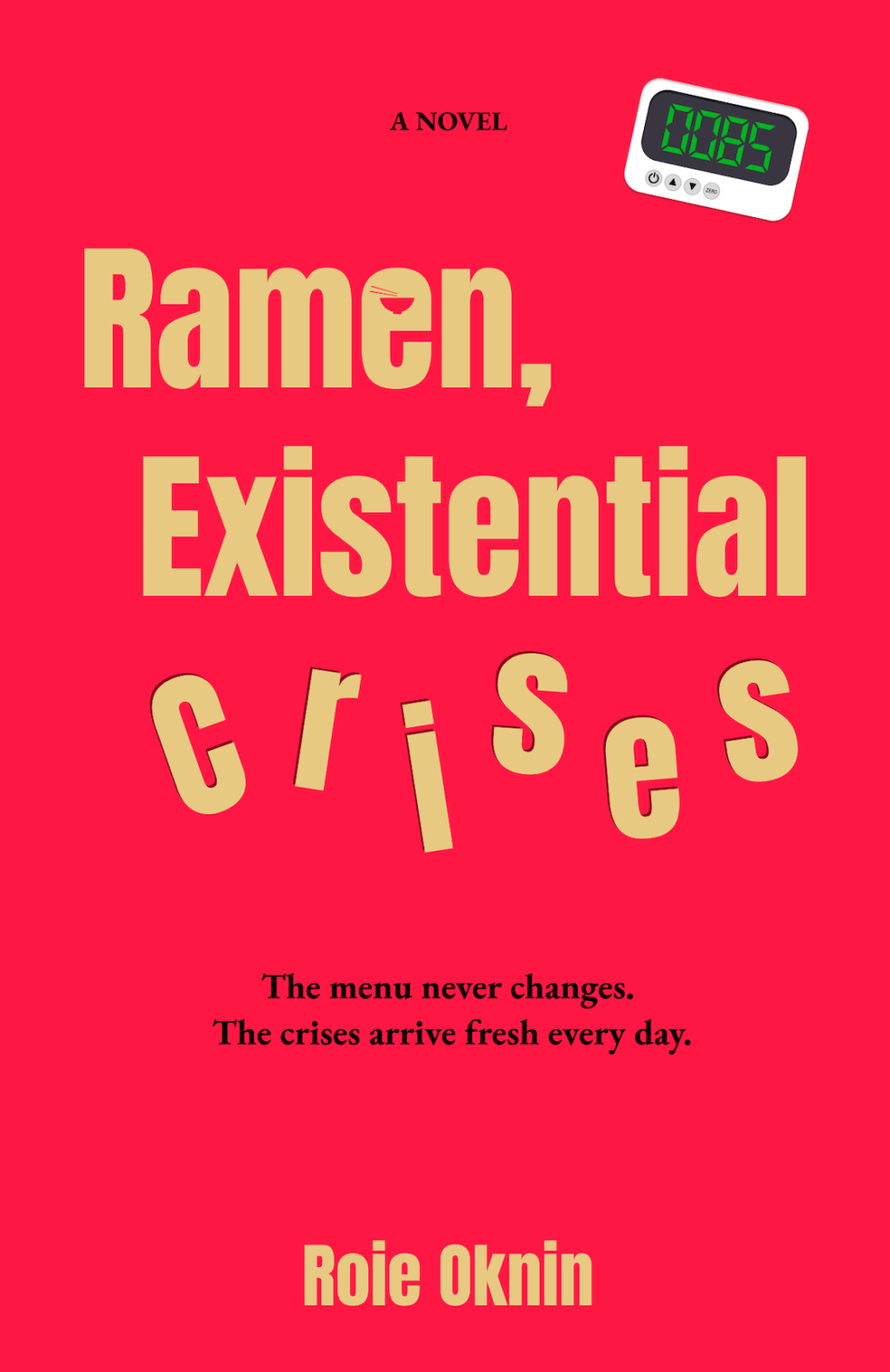
Soup is comfort food across many cuisines. Probably this is why the author establishes that Ramen is not soup from the very beginning of the book.
Roie Oknin’s Ramen, Existential Crises is debut novel about losing the plot in life but still having a fulfilling existence. While the readers can argue about how fulfilling the life Koji, our protagonist, is living, it is definitely not meaningless. Even before the external validation arrives, the perfectly boiled noodles with the ever-boiling broth is something Koji is proud of.
As someone who loves good food and comfort books, I had a great time reading Ramen, Existential Crises.
What is this Comfort Japanese Book set in a Restaurant About?
The book is about Ramen and the side of Existential Crises it is served with at this particular restaurant. I am not even joking. Koji has not graduated from his Political Science degree because he froze up on the last presentation and failed that module. He does not know why that happened. He does not know why he could not go back to redo that module afterwards.
All Koji knows that he is temporarily working at the ramen restaurant for the past 6 years.
The family expectations, the self-loathing and FOMO, all come crashing down one fine morning in the middle of lunch service, when the battery in the noodle timer goes out. Koji is asked to go buy the batteries from the neighbourhood mart and he cannot move beyond the threshold. It is slowly highlighted how he has not been going outside the restaurant at all, eating, living and sleeping there.
It is not much of a life, but it is comfortable and Koji has gotten stuck in his comfort zone.
The curious part is that his life was not even that dreary. He was good at what he did, he had dreams and plans of working at the embassy after his degree. He had given presentations before. He completely meant to sign up for that class and finish his module next semester. But he never got to it. He dressed, got ready, checked the time and could not move out the door.
A sort of burn out put him in a fugue where all actions seem too complicated. He found simplicity in that ramen shop. His tasks were simple, his coworkers just as quirky and nobody asked any questions.
The book discusses the mental state Koji is in, the pressures of him succumbing to it and what he does to get out of it or if he does get out of it at all.
What Makes “Ramen, Existential Crises” Different?
You have read a hundred cozy books, I know I have. I was bored of a burntout city office worker finding nirvana by the beach or in a rural town and coming to their life all recharged. As someone who has never wanted to come back to life from vacations, Ramen, Existential Crises felt like my voice was finally being heard.
Oknin has captured the inertia of the protagonist exceptionally well in his debut novel. The inability to function like a normal human being even while you are trying to get yourself to just send an email, go outside or call home, this aspect of life eating up the protagonist while he submits to simple routine is vividly described in the narrative.
Food is depicted as a comfort, both making and eating it. On theme with inertia, the decision paralysis is taken away at the restaurant with just one dish on the menu. No, they do not even customise orders. No wonder this becomes Koji’s safe space.
Koji cannot face his parents after not having any answer to why he has not yet received his degree. He avoids them to the point that he develops a passive relationship with them and is only too happy to not go home. But that is where the brilliance of the writing kicks in, he is anxious, shamed and indifferent, he does not feel happiness.
This is almost like seeing the other side of comfort where you get so comfortable that you are unable to leave, like some twisted fairytale. The only difference is that Koji wants to leave but it has been so long that the idea of leaving has become a complete alien concept. He looks at the rain outside the front door, the alley behind the back door and he is unable to imagine a world beyond them.
The surprisingly accommodating set of co-workers and owner at the restaurant are developed with their own quirks. Despite this being a short book, I was so engaged with the full cast of characters that would now love to read whole books on each of the side characters. The writing combines a breathlessly anxious tone while keeping the stakes low, becoming a true page-turner.
The equilibrium of the restaurant is threatened first with the embassy worker who talks to Koji about the new metro line that Koji has not noticed going up. Then comes the food critic and his praise that make the line outside the restaurant longer and increase the questions from the customers about the place, recipe and the staff. Finally, Koji’s friend from the unfinished degree shows up to eat there with his colleagues. The incident with the batteries and the owner’s sudden absence one day only further threatens the steadiness of Koji’s sanctuary and when finally, one of the staff members leaves the job, Koji is almost pushed into action.
We do not get to know how far he goes, only get hints that he might be ready to move on now.
The ambiguity of the ending feels fitting for this book. If the readers recognise themselves in any of these characters, it shows that the choice is up to them. The emphasis on the cooking role not being shameful is perfectly balanced with one not living up to their potential. The sense of FOMO is tempered with the assurance that the opportunity has not run away from any of the cast of characters.
There is a mature, self-dprecating humour present throughout the book that creates a balance between the change and the static. The book attains a different kind of comfort in showing the other side of burnout and doing it well.
If you like reading comforting cozy books but would like something a little different in it, Ramen, Existential Crises by Roie Oknin would be a good fit for you.
Have you read any of the popular cozy Asian books? If you want to check out Ramen, Existential Crises by Roie Oknin for yourself, pick up a copy here.
Request book reviews and get updates on latest reads here: connect with me.


Leave a Reply