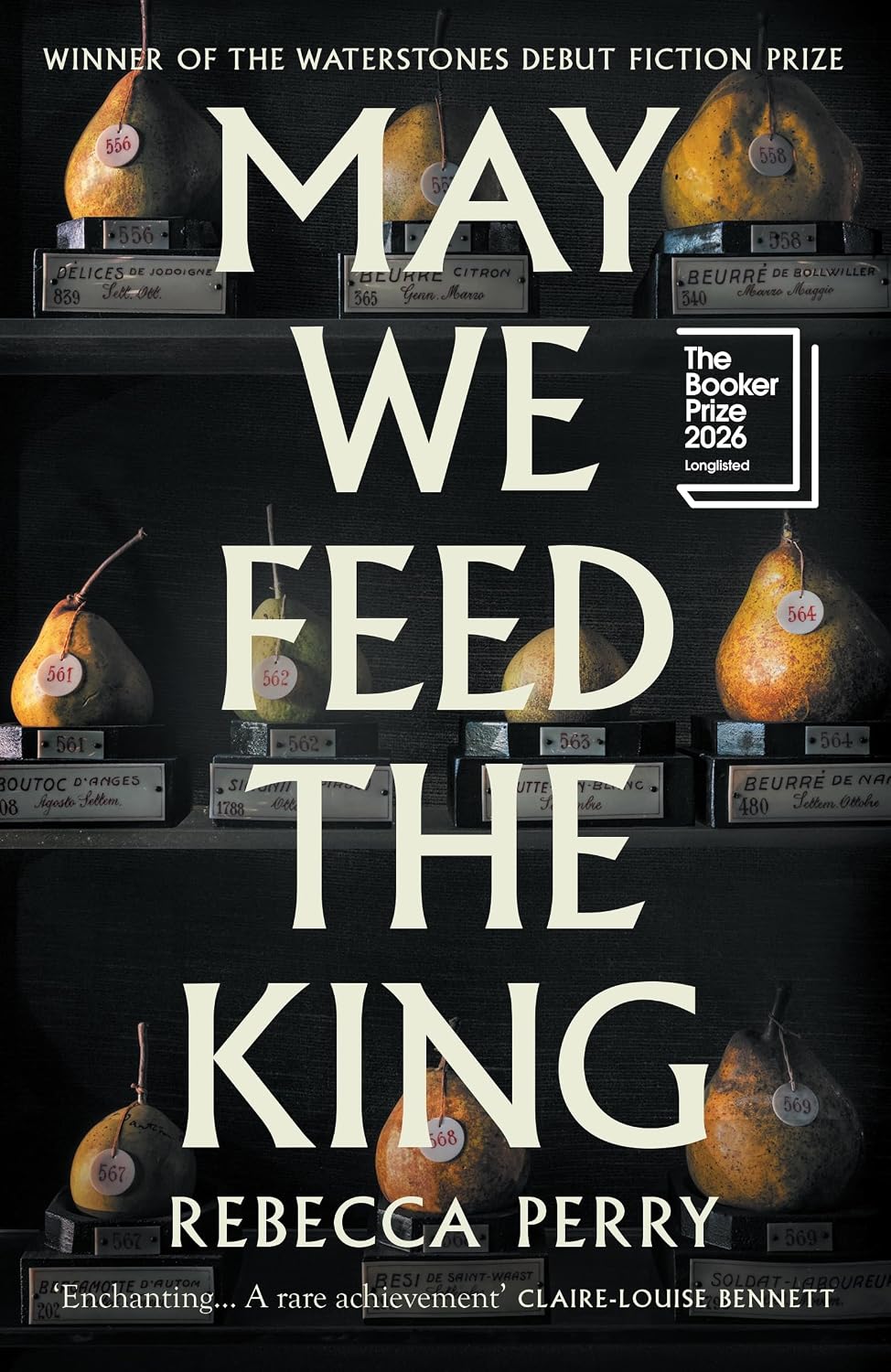
I might just have found my favourite book on the Booker Prize Shortlist 2026 with May We Feed the King by Rebecca Perry. I am just halfway through the list, so you better keep an eye on this space to find out the final verdict, but we are getting there.
I had heard all good things about May We Feed the King before going into it. I went into the book without any context, completely blind, but with high expectations. Now, I think I should have saved the best for the last.
With that, let’s get into it!
The Plot of “May We Feed the King”: What is this book on the Booker Prize Shortlist 2026 all about?
The book features a curator who gets a job to stage a castle as part of their marketing activities. She, with the help of the archivist of the castle, finds detailed records of the time a king resided there and through the meticulousness of her work, she transcends time to reach into the past and reconstruct the story of the king’s life.
While Part I follows this unnamed narrator, Part II drops the readers into the medieval times in this king’s court. None of the characters are named in the book. The third son, this king had never expected to inherit. He is vehemently opposed to the idea of giving any orders that would lead to bloodshed and loss of life. He is cuckolded by his wife, but they remain on friendly terms.
While the king, first, sinks into a sort of depression at the thought of being asked to make decisions, he is soon tired of the bloodthirsty council and ministers. He gets very good at tying up the people in arguments so that he actually does not have to make any decision. But his crown still is too heavy for him to bear.
When court politics and gossip isolate him further from the few people he had come to trust and enjoy spending time with, he and his queen run away. Court gossip says they both ran away with their respective lovers, some others say this is a ploy of the foreign princess who is also the king’s cousin’s wife and had been seducing the king. The readers do not know what exactly happens.
Part III brings us back to the present and the curator has completed her project. While her vision is not something the management is happy with, she has outdone herself with her attention to detail. The story of this unnamed, forgotten king has come to life.
While on the surface, the plot might seem disorienting, the writing holds the threads of the narrative just tightly enough to keep the readers engrossed.
Should You Read “May We Feed the King” Afterall?
Rebecca Perry is a poet making her debut as a novelist with May We Feed the King. Her language and narrative style makes it ample evident this fact. I do not mean that she writes in flowery language. But her narrative style is lyrical and her descriptions uniquely detailed.
I found the subject matter to be intriguing. It is a unique take on the obsessions of work and transcending time with employing details. What is just another project to the curator ends up bringing her the joy of work back after she has suffered a setback in life. The archivist revels in both of their work and the staging with his deep understanding of history. The reluctant king, in his own way, loves his responsibilities too much to touch them at all. The young attendant to the king dreams of the lost king while on his deathbed in his old age, long after the kin has been deliberately forgotten.
The yearning in the book for something better, to find purpose and to shake off inertia, gives it a constant subjective tone. All of the characters are known by their titles, the work they do. This trap them in their roles. The yearning to find meaning in that role, to re-estimate one’s worth in it and the assurance of actually being good at it are all at war. The restlessness of the book manifests in the lack of details about the plot even though we are given meticulous details about the curator’s work and the politics of this unspecified court.
The anonymity of the book leads to a charming narrative that made me want to turn back to the first page as soon as I finished reading it. In a less is more fashion, Rebecca Perry structures the narrative to hold back from the readers. The secrecy and the vagueness leave the readers wanting more. The questions left about “What happened next?” is the charm of the book despite it still not being quite so open-ended.
In the repetition of variations on the question of “May we feed the King?” in the plot defines death. How long can a person live without eating? This book questions how long a person can go on without feeling fulfilled.
The curator works wonders in bringing each room to life. When the management reduces her work to displaying items of high monetary value, there is a distinct lack of understanding there. Here, the microcosm does not survive the macrocosm. May We Feed the King by Rebecca Perry leaves the readers in a haze of understanding an exclusive society, not everybody is allowed to experience it.
I recommend May We Feed the King as the must-read from this year’s Booker Prize Shortlist.
Have you read any of the Booker Prize Shortlist books of 2026 yet? What literary fiction has caught your attention recently? Pick up a copy of May We Feed the King by Rebecca Perry here.
Request book reviews and get updates on latest reads here: connect with me.


Leave a Reply