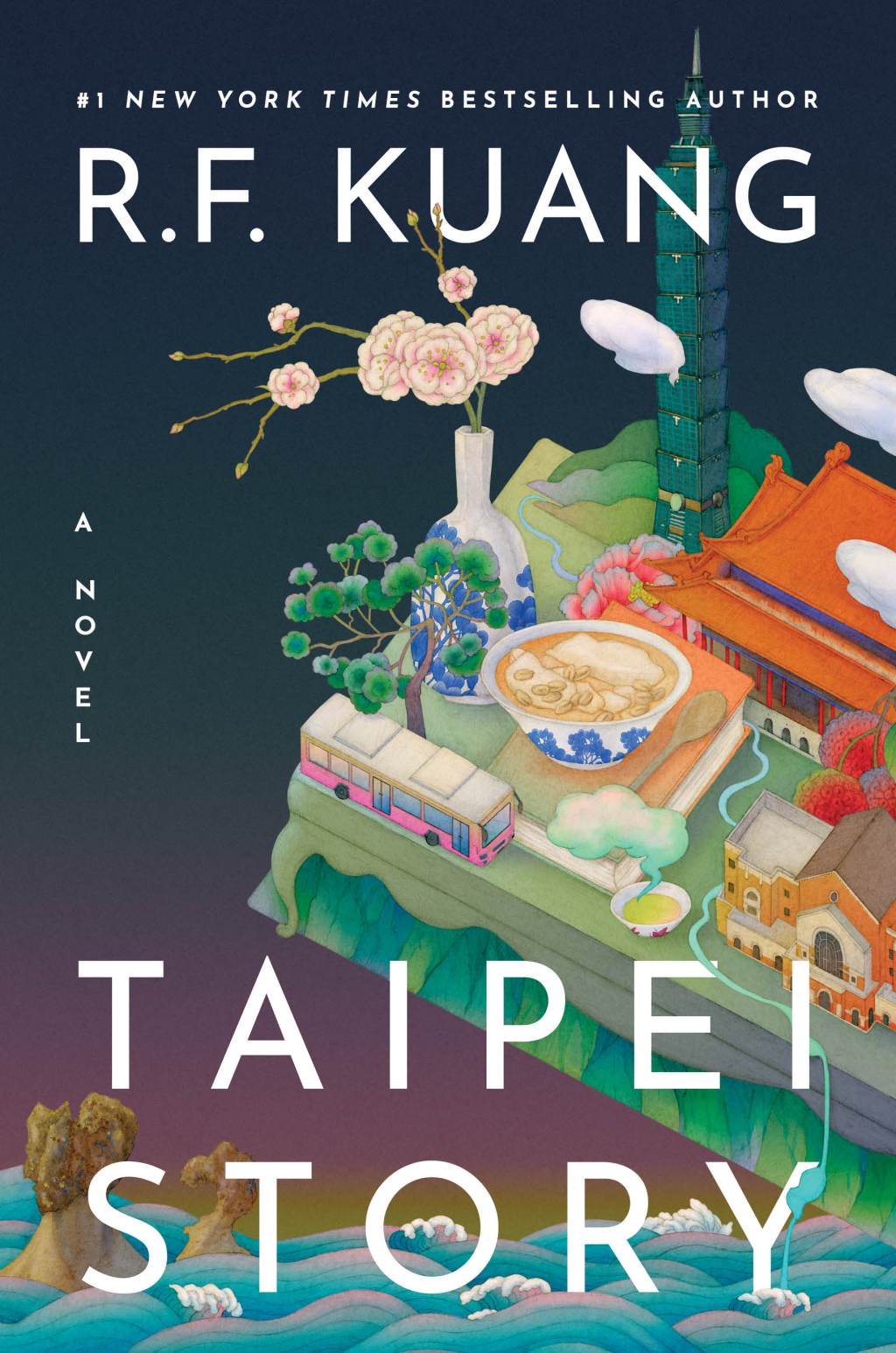
When Taipei Story was initially announced, I had the notion that it would be more like R. F. Kuang’s Yellowface, social commentary that would not be too subtle. Considering the rest of her body of work is fantasy and fantasy set in dark academia, I was not too off the mark.
People have a lot of criticism for Kuang for being didactic, too erudite in her writing and sometimes, too obvious. While I agree with all the critiques, I also like her writing because of those aspects. As a woman in academia who writes for the commercial market, she knows what she signed up for and has let the world know what she thinks of her critics in Yellowface. But if you hated the self-insert character in Yellowface and if I might say so, Katabasis, you might loathe Lily in Taipei Story.
With that, let’s dive in.
The plot of the new R. F. Kuang Book: What is Taipei Story about?
The book chronicles Lily Chen’s Summer language program in Taiwan as a Chinese American academically successfully student back in America. The narrative is circular, beginning with her taking the flight into Taipei and recognising fellow students here for different Chinese language programs and ending with getting on a flight home with the same people. The writing style is in a form of epistolary, it is written in a diary style with very few dialogues. This makes Lily an unreliable character.
Lily has had a complicated family life. With a suicidal older sister, aloof younger sister and Asian parents, she has turned to studying. Being the “easy child” is her life’s goal, and she has been successful at it. She came to Taiwan to learn Chinese in an immersive atmosphere, her goal in learning the language is to speak to her grandparents. But she did not get the chance to get her visa for the Mainland to go see them and then it was too late, her grandfather had died while she was in Taiwan.
The miscommunications, social awkwardness and collage drama that unfolds with her roommate Anna, JC and Margit is entertaining but juvenile enough to balance out the deep and thoughtful questions about identity and language barriers. The teenage-esque drama is not entirely irrelevant. It adds to the discourse of communication, understanding social cues and trying to fit in.
My Verdict on Taipei Story: Is it worth reading?
It is a slow and difficult read because of the themes discussed in Taipei Story. R. F. Kuang has written a deeply personal book that does not shy away from addressing the uncomfortable. The language of the book is surprisingly simple.
Lily lives in her own mind. She overthinks every interaction and analyses them in her free time. While it is annoying initially, the more she reveals about herself, the more I came to sympathise with her.
The constant FOMO of losing out on her peers’ experiences, the FOMO of not knowing enough about where she came from on top of not belonging anywhere firmly, shapes Lily’s experience of life heavily. Her need to be good at everything she picks up is thwarted when it comes to learning Chinese. She cannot understand the social cues from her classmates when speaking English, her understanding of the same in Chinese is worse. Her final essay is on the subject of how people change their personalities in different languages.
The untimely loss of her grandfather was the most emotionally involved part of the story. It taps into the family history of immigration and loss facilitated by global political turmoil. Lily realises that even though her grandmother is still there, her memory is almost gone and she has lost her chance to connect with that generation. Her mother saw moving to the US as a way out, so when Lily is interested in her family history, her mother shuts it down by saying it has nothing to do with Lily.
Kuang has successfully written layers of complex identity into this simply-worded book. I was fascinated by the simple acts of getting coffee and studying at the cafe that set her apart from the locals. The hierarchy in the language program itself, the politics of the mainlanders and Taiwanese people, the attitude of locals towards Americans and Asian parents pressuring their children into “accomplishments” all bundle into this mixed experience of a summer.
Lily gets to explore Taipei properly after she has been abandoned by her friends. She finds the city a complex experience of senses, more westernised than she had expected and more confusing than she had anticipated. This is a narrative of self-exploration, of going farther away from home to reach home but not really getting there.
It is a book you cannot binge. It is a book you should not binge. Take your time with it, set it aside for a week to pick it up again. But give it a try this year. Taipei Story by R. F. Kuang is highly recommended.
Pick up a copy of the book here: buy book.
Request book reviews and get updates on latest reads here: connect with me.


Leave a comment