Ever read a book you looked forward to and ended up not understanding any of it at all?
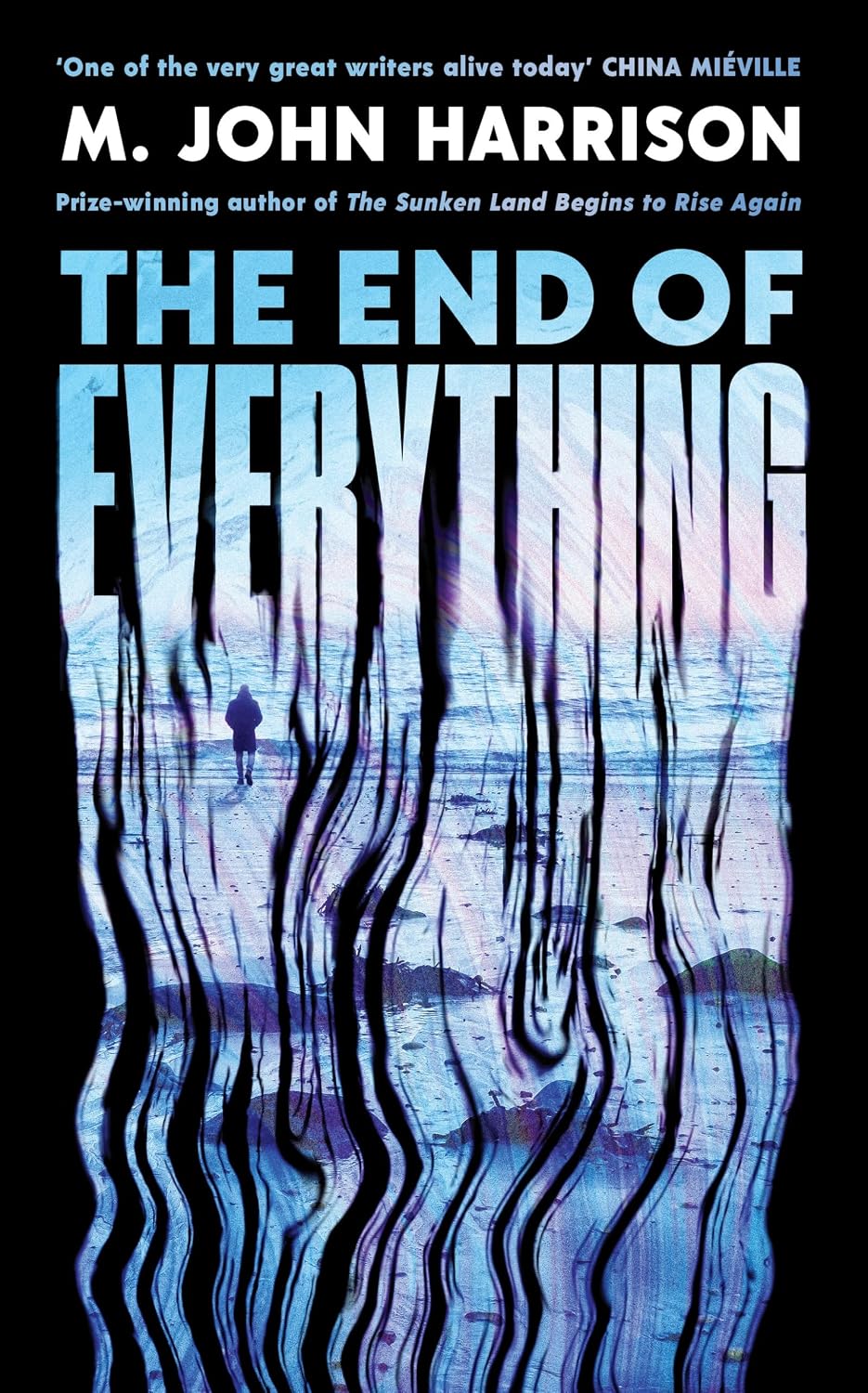
This is me with The End of Everything by M. John Harrison.
The End of Everything is the first book in the 2026 Booker Shortlist reading challenge. The fact that it disappointed me to the point of wanting to give up the reading challenge completely, says a lot about how this reading challenge is going.
I cannot do a section about the plot of the book because there was none. My biggest contention with this book is the lack of a cohesive narrative. Is that deliberate? I am sure it is. Is the effect a frustrating read to the point I was glad it was less than 200 pages? Yes.
The book, on the surface, is set during an alien invasion. The iGhetti are here, but the elusive aliens are not very concerned with human life. They have not even attacked. From the subtle narrative, it is inferred that the humans have bombed themselves. There is something called a bad patch happening where people in the vicinity keep getting the same mirage projected to them.
While all of this is happening in London, we are in a small town by The Channel where people are leaving the country by boat. The sea is primordial soup with alien beings washing up on the shore. It is hinted at that the continent might be a better place for people. But still, most of the people of the town remain on this side of The Channel.
This is supposed to be a metaphor for Brexit, encompassing the anxiety of uncertainty and alienation. This is supported by the artworks referenced in the book. But a regular reader won’t know that from just reading the book. In its implicit Britishness, it fails to engage the reader completely
We are introduced to Phillip Tennent, his aunt Marnie, the alien he finds on the seashore and Tennent’s love interest, Alice. Tennent is going through an emotional and identity crisis, as one does during an apocalypse. This has led him to mudlarking where he finds the alien, a size of a baby. As this alien keeps growing, it is taking on the shape of Tennent.
Marnie, in her crisis, is completely nonchalant about murder. For a book so entrenched in its Britishness, there is a concerning amount of gun violence involved. Marnie, in a way, is the reader personified. She asks the right questions, up until she is too confused, too frustrated and too upset to process everything and shoots everyone in sight.
The alien is the most interesting aspect of this narrative, as one expects in a speculative fiction.
You would be surprised by how little the alien is actually featured in this book. It is central to the plot by staying on the fringe. It does not answer questions of import like what it actually thinks it is and what it intends to do here. Well, the latter is pretty clear by the end of the book, throw the humans into a disarray to inherit the planet from them.
The book fails to make the reader feel any sort of way about any of the characters. The plot is deliberately vague to induce acute anxiety. The writing style is surprisingly simplistic and accessible. This makes the frustration with the book that much more intense. The plot is kept just out of reach to keep the reading but then there is absolutely no pay off. It’s a well-written airball. There is no substance to the book that was apparent to me.
I can only hope the other 5 books are better than this. But considering the book I hated this much last year actually won the Booker Prize, this book surely has potential.
Have you read any of The Booker Prize Shortlist 2026? What has been your favourite? If you want to check out The End of Everything by M. John Harrison for yourself, pick up a copy here.
Request book reviews and get updates on latest reads here: connect with me.


Leave a Reply